Restaurant menus last longest when cleaning matches the material: wipe laminated and synthetic menus with a soft damp cloth, keep card and paper menus dry and out of the wipe-down routine, store spares flat and away from heat, and rotate stock so the same copies are not worn out first. Customized Restaurant Menus can match the stock to the care routine your team already follows.
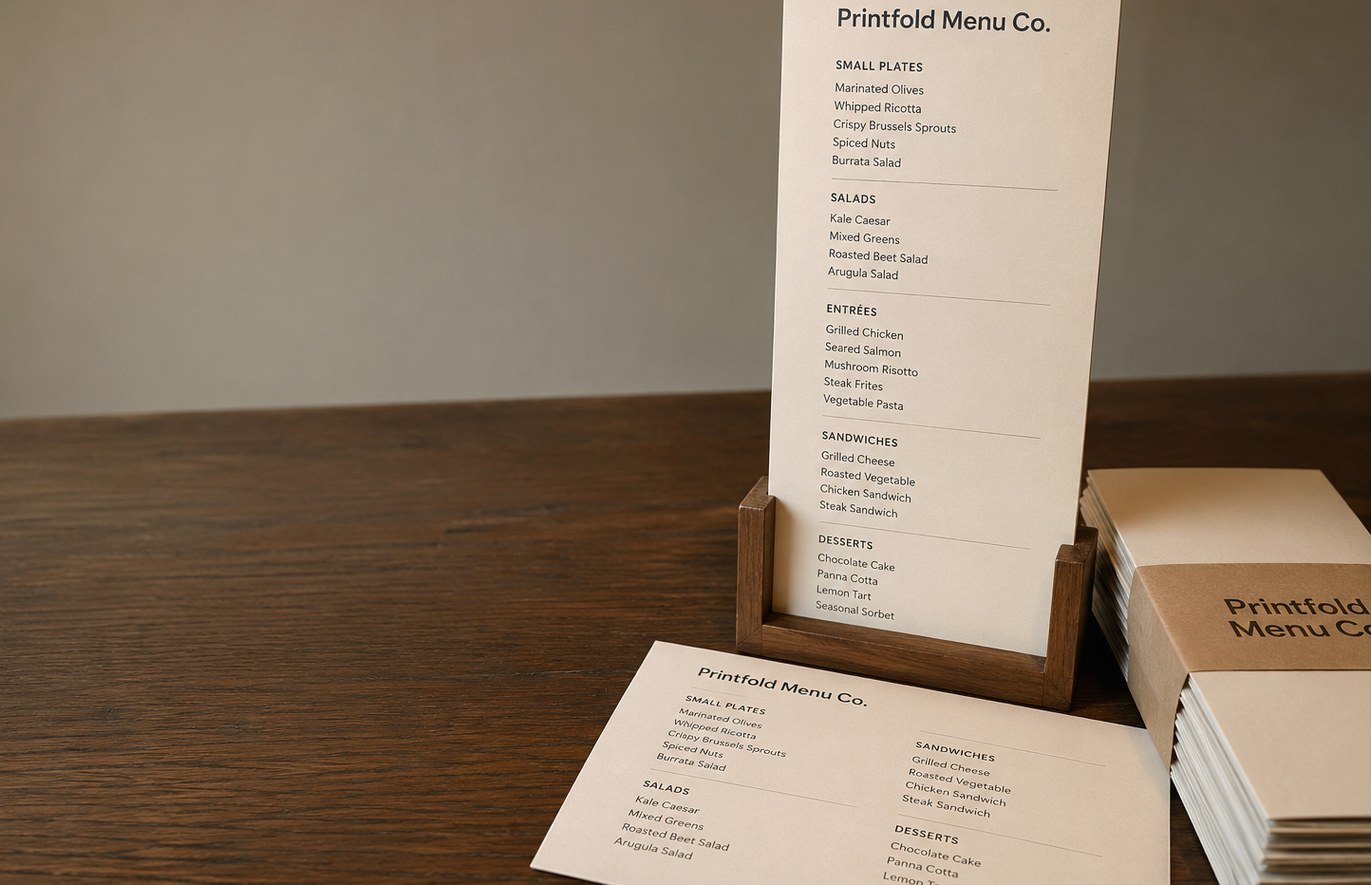
- Laminated and synthetic menus can be wiped between tables
- Card and paper menus should be kept dry and replaced, not scrubbed
- Store spare menus flat, boxed and away from kitchen heat
- Free mockup within 24 hours and about 2 weeks standard turnaround for replacements
How should a restaurant clean its menus between tables?
A restaurant should clean its menus between tables according to the material: laminated and synthetic restaurant menus can be wiped with a soft cloth that is damp, not dripping, while card and paper menus should be checked, dusted off and pulled from service when marked. Scrubbing a paper menu does not clean it; it only spreads the mark and softens the stock.
The best routine is the one a busy host stand will actually follow. That usually means a dedicated cloth kept at the stand, a quick wipe of the front and back, and a stack where wiped menus dry before they go back to guests. Stacking menus while they are still wet lets them stick together and can leave water marks on the edges.
For the cleaning product itself, follow your local health guidance and the label on whatever sanitizer your kitchen already uses. Strong solvents and abrasive pads are the main things to avoid, because they can haze a glossy lamination and wear through printed ink over time.
- Laminated menus: wipe front, back and edges, then dry before stacking.
- Synthetic menus: wipe the same way; the surface tolerates moisture well.
- Card and paper menus: keep dry, spot check and replace when stained.
Which restaurant menu materials hold up best to daily wiping?
Laminated and synthetic restaurant menus hold up best to daily wiping, because both have a sealed surface that sheds spills instead of absorbing them. Coated card can tolerate an occasional light wipe, while uncoated paper and textured stocks are best treated as menus you replace rather than clean.
Choosing the material is really choosing a care routine. A family restaurant that wipes every menu after every table needs a surface built for that. A tasting-menu restaurant that hands out a fresh card each evening never needs to clean a menu at all. Both are good decisions when the stock matches how the team works.
| Material | Daily wiping | Best care approach |
|---|---|---|
| Laminated card | Yes | Wipe and dry; watch corners and edges for lifting |
| Synthetic stock | Yes | Wipe and dry; good for patios and busy dining rooms |
| Coated card | Light, occasional | Spot clean gently; replace when marked |
| Uncoated paper | No | Keep dry; treat as a short-run or single-service menu |
If you are unsure which surface fits your service, the laminated vs. synthetic comparison and the disposable vs. reusable guide walk through the trade-offs in more detail.
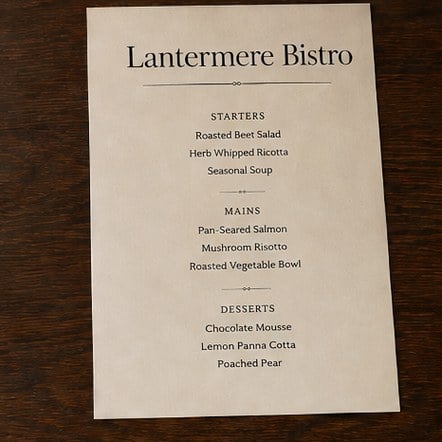
How do you keep card and paper menus looking fresh through service?
Card and paper restaurant menus stay fresh through service when they are handled less, kept dry and replaced on a schedule instead of waiting until they look tired. These menus are not meant to survive every spill; they are meant to look crisp and to be swapped out cheaply and quietly when they no longer do.
A few habits make a real difference. Hand card menus to guests rather than leaving them on wet tables. Keep them out of the bus tub path and away from water glasses on the pass. Store the working stack in a dry holder at the host stand, not on a counter next to the bar sink.
Paper is also where a planned reorder pays off. Restaurants that use daily or specials sheets, coursed dinner cards or placemat and kids’ menus usually treat them as consumables from the start. Customized Restaurant Menus prints these on the same design system as your main menu, so a fresh batch looks identical to the last one.
- Hand card menus to guests; do not pre-set them on damp tables.
- Keep a dry holder at the host stand for the working stack.
- Pull any menu with a crease, stain or soft corner before the next seating.
Where should spare restaurant menus be stored?
Spare restaurant menus should be stored flat, boxed and away from heat, steam and direct sunlight, ideally in an office or dry storeroom rather than the kitchen or behind the bar. Heat and humidity are the quiet enemies of stored menus: they can curl card, cloud lamination and make stacked copies stick to each other.
Keep spares in the box they arrived in, with the box labeled by menu name and version. That label matters more than it sounds. When a restaurant runs a dinner menu, a lunch menu, a drinks list and a dessert card, unlabeled boxes are how last season’s prices end up back on the floor.
For restaurant groups, store each location’s spares at that location and keep a note of how many are left. A simple count at the end of each month tells you when to reorder long before the host stand runs short. The menu programmes and reprints page explains how repeat runs keep the same design and stock.
- Store flat in the original box, never rolled or standing on edge.
- Label each box with the menu name and the version or season.
- Keep boxes off the floor and away from ovens, dish machines and windows.
- Recycle old versions as soon as a new menu goes into service.
Why should a restaurant rotate its menu stock?
A restaurant should rotate its menu stock so wear is spread across every copy instead of concentrated on the few menus at the top of the stack. Without rotation, the same handful of restaurant menus go to every table, wear out early and make the whole set look tired even when most copies are still nearly new.
Rotation is simple. Return wiped menus to the bottom of the stack, not the top. At the start of the week, swap a few copies from storage into the working stack. Retire any menu with lifting corners, cracked lamination or faded ink immediately, so guests never see the worst copy you own.
Rotation also gives you an honest picture of how fast your menus actually wear. Once you know that, you can plan replacements calmly instead of reacting when a large party is seated and there are not enough clean menus. Bar and patio menus usually need their own rotation, because they face more spills and more sun than the dining room. The bar, drinks and dessert menus page covers those formats.
When is it time to replace restaurant menus instead of cleaning them?
Restaurant menus should be replaced instead of cleaned when the damage is in the material, not on the surface: peeling or cloudy lamination, cracked folds, permanent stains, faded ink, soft corners or out-of-date dishes and prices. Cleaning only removes what sits on top. Once a menu looks worn after a wipe, it is costing you more in impressions than a replacement would cost.
A useful test is to hand the worst menu in your stack to someone who has never eaten at your restaurant and ask what it says about the place. Guests read a worn menu as a sign of how the kitchen is run, fairly or not.
Replacing is easiest when the artwork is already on file. Customized Restaurant Menus keeps your approved design, returns a free mockup within 24 hours for any edits, offers unlimited free revisions and asks you to pay nothing until you approve the design. Standard turnaround is about 2 weeks after approval, with faster turnaround available through express shipping. To plan the next run, start with the custom quote form or see how it works.
Can menu design choices make restaurant menus easier to care for?
Menu design choices can make restaurant menus noticeably easier to care for. Darker or patterned backgrounds hide minor marks better than large areas of pale solid color, rounded corners resist lifting and dog-ears, and a format sized for your tables gets knocked, folded and dropped less often.
Layout matters too. Keeping changeable items such as daily specials off the main menu means the durable menu stays current longer, while a cheaper insert or table card handles the changes. The daily and specials menus page shows how restaurants split those formats.
When you request a mockup, tell Customized Restaurant Menus how the menus will be cleaned, where they will be used and how often you expect to change the dishes. That context shapes the stock, finish and format recommendation, and it is far easier to build care into the design than to fight the wrong material later.
- Choose backgrounds that forgive small marks on high-traffic menus.
- Ask about rounded corners for menus that are wiped and stacked often.
- Move fast-changing items to inserts so the main menu lasts.
Frequently asked questions
What cloth should I use to wipe laminated restaurant menus?
Laminated restaurant menus are best wiped with a soft, lint-free cloth that is damp rather than wet. Microfiber works well because it lifts grease without scratching a glossy finish. Avoid scouring pads and paper towels that leave fibers behind, dry each menu before stacking, and keep a dedicated cloth at the host stand so menus are never wiped with a cloth used on tables or the kitchen pass.
Can synthetic restaurant menus go in a dishwasher?
Synthetic restaurant menus should not go in a commercial dishwasher, even though their surface handles moisture well. High heat, strong detergents and spray pressure can warp the stock and wear down the printed ink. A hand wipe with a damp cloth and your usual approved sanitizer is safer, faster and keeps the menus flat. Customized Restaurant Menus can advise on stock if your cleaning routine is unusually demanding.
Will hand sanitizer damage printed restaurant menus?
Printed restaurant menus can be affected by hand sanitizer that is still wet when guests pick them up. Alcohol-based gels can soften coated card and leave cloudy marks on some laminated finishes over time. Keeping sanitizer stations a short walk from the host stand rather than right beside the menu stack helps, and wiping a sticky menu with a damp cloth usually removes residue from sealed surfaces.
How do I stop laminated restaurant menus from peeling at the corners?
Laminated restaurant menus peel at the corners mostly from being dropped, stacked edge-first or wiped hard against the grain of the edge. Store them flat, wipe from the center outward and pull any menu with lifting corners before it catches on clothing. Customized Restaurant Menus can also suggest rounded corners for menus that are handled heavily, because rounded edges give lamination less to catch.
Should restaurant menus be stored in the kitchen or the office?
Restaurant menus are better stored in an office or dry storeroom than in the kitchen. Kitchen heat, steam from dish machines and grease in the air can curl card stock, cloud lamination and leave a film on spare copies before they ever reach a guest. Keep the boxes flat, labeled by menu name and version, and bring a small working supply to the host stand as needed.
Can sunlight fade restaurant menus left on a patio?
Restaurant menus left on a sunny patio can fade, especially in strong colors, and card can dry out and curl. Bringing patio menus in between services and storing them out of direct sun slows that wear. Customized Restaurant Menus can recommend a stock suited to outdoor seating and print a separate patio set, so the dining room menus are not the ones carrying all the outdoor wear.
How should a bar keep its drinks menus clean on a wet counter?
Bar drinks menus stay cleanest when the stock is sealed and the menus are kept off the wet counter between guests. A small holder or caddy at the end of the bar keeps them dry, and a quick wipe and dry at each turn removes sticky rings. Customized Restaurant Menus can print a bar list on a wipe-friendly stock while the dining room menu stays on card.
Is it better to clean restaurant menus or simply reprint them more often?
Restaurant menus on laminated or synthetic stock are usually worth cleaning, while card and paper menus are usually better replaced. The choice depends on how often your dishes change: if prices and items move every few weeks, cheaper reprintable menus may outlast their content anyway. Customized Restaurant Menus can help you match the stock to how long each menu needs to stay current.
How do I get coffee or wine stains off a card restaurant menu?
Coffee and wine stains rarely come off a card restaurant menu, because uncoated or lightly coated card absorbs the liquid into its fibers. Blotting immediately can limit the mark, but rubbing spreads it. The practical answer is to pull the stained copy and keep a few spares ready. If stains are frequent, Customized Restaurant Menus can suggest a coated or laminated option for that menu.
Can I order a few replacement restaurant menus that match my existing set?
Replacement restaurant menus can be ordered to match an existing set when the design and stock details are on file with Customized Restaurant Menus. Order quantities depend on the product and format, so the quote form confirms what is possible for your menu. You get a free mockup within 24 hours to confirm nothing has changed, and you pay nothing until you approve the design.
What is a good routine for checking restaurant menus before each service?
Restaurant menus are easiest to keep presentable with a short pre-service check at the host stand. Flip through the working stack, pull any copy with stains, creases or lifting corners, confirm every menu shows the current version and swap in fresh spares from storage. Doing this before doors open means guests never receive the worst menu, and you see early when it is time to reorder.
Do menu covers or holders make restaurant menus last longer?
Menu covers and holders can make printed restaurant menus last longer by protecting the insert from spills and handling, and they let you swap the printed page without replacing the whole menu. The covers themselves still need wiping and checking. Ask Customized Restaurant Menus about formats that suit covers when you request a mockup, so updates stay simple when dishes or prices change.
Get a free mockup for your restaurant menus
Send your logo or idea and the quantity you have in mind. Customized Restaurant Menus returns a free mockup within 24 hours, you approve the design before anything is produced, and standard turnaround is about two weeks with faster options available. Get a custom quote.