Matte vs. Gloss Restaurant Menus: Which Finish to Order
glare-free matte or photo-rich gloss.
Matte restaurant menus are the safer choice for most dining rooms because they cut glare under low or direct light, while gloss restaurant menus make food photos and bold colors pop. Customized Restaurant Menus prints both finishes, returns a free mockup within 24 hours and delivers in about 2 weeks, so you can match the finish to each menu.
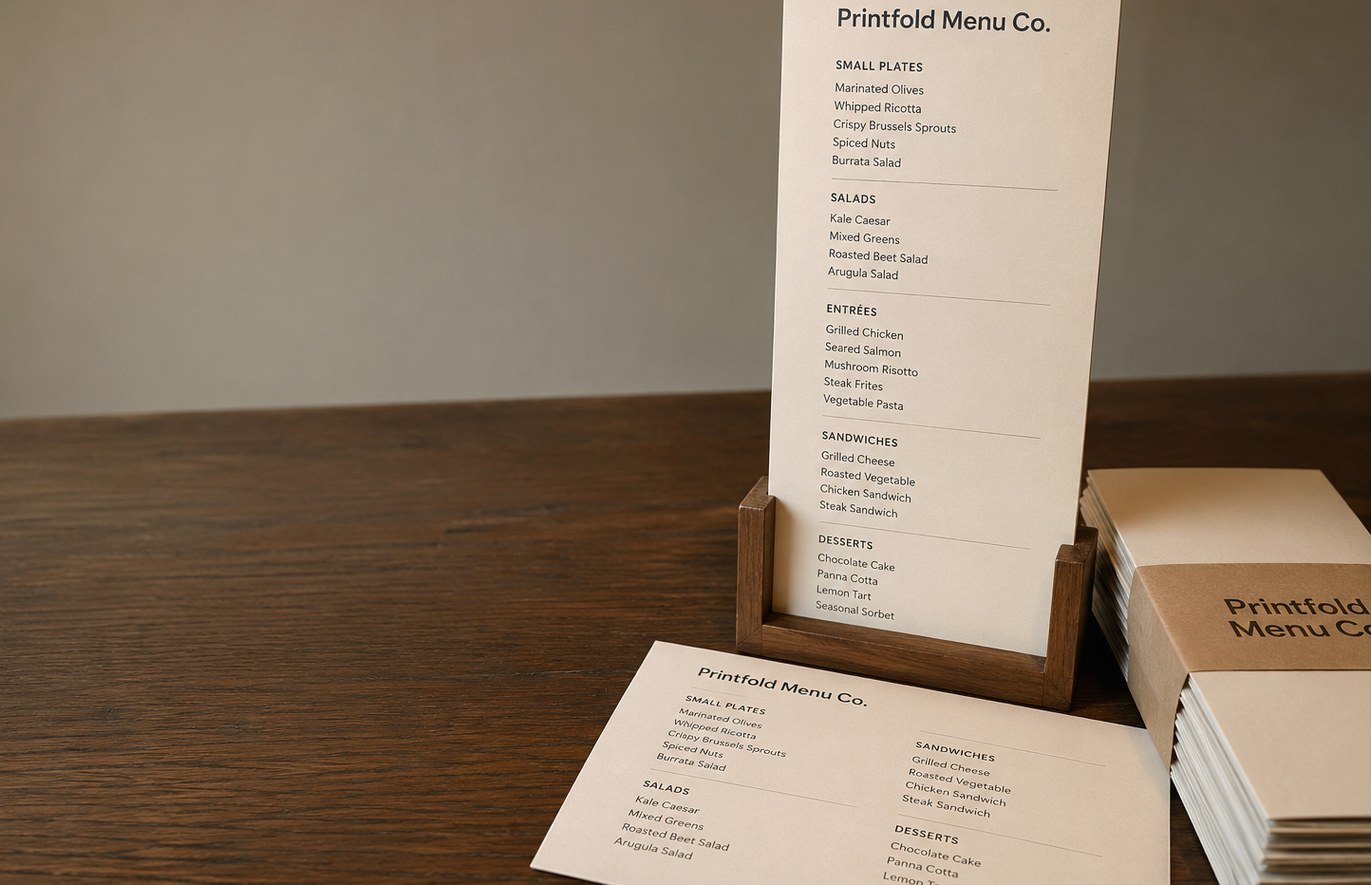
Where matte and gloss restaurant menus each earn their place.
Dim dining rooms
Matte table menus stay readable under pendant lights and candles because the surface scatters light instead of throwing a bright reflection back at the guest.
Photo-led casual menus
Gloss menus suit diners, burger bars and family restaurants that sell with dish photos, because the shine deepens color and sharpens detail.
Bars and lounges
Matte drinks menus avoid the hot spots that back-bar lighting and low lamps create on a shiny surface, so cocktail names stay legible.
Patios and window tables
Matte menus are easier to read in direct daylight, where a gloss surface can mirror the sky and wash out small type.
Takeout and counter menus
Gloss takeout menus give photos and offers extra punch on a counter stack or a fridge door, where the menu works like an advert.
Kids' menus and placemats
Matte paper takes crayon and pencil far better than gloss, so activity menus and placemats are usually printed without a shiny coating.
Custom restaurant menus styles you can order.
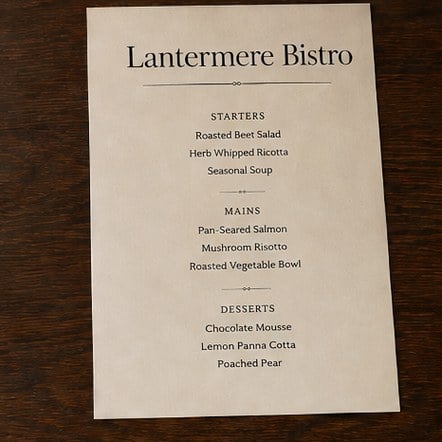
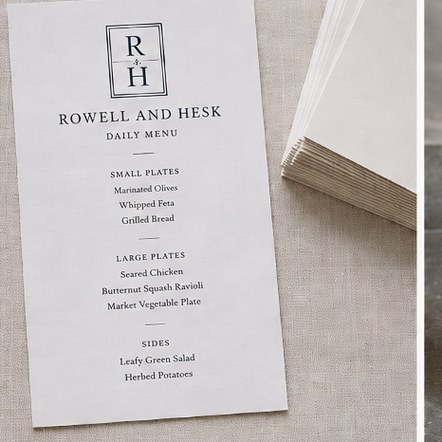
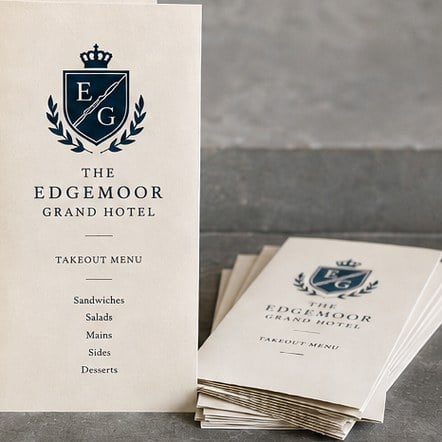
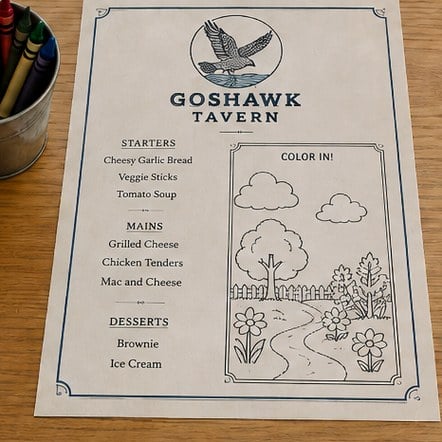
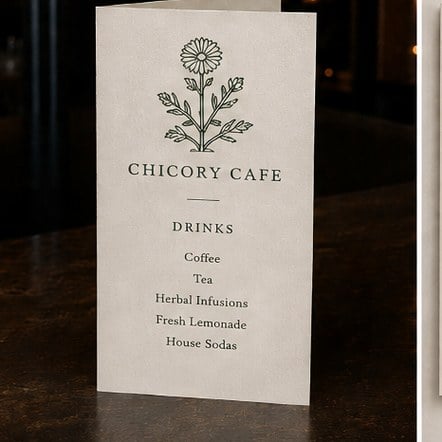
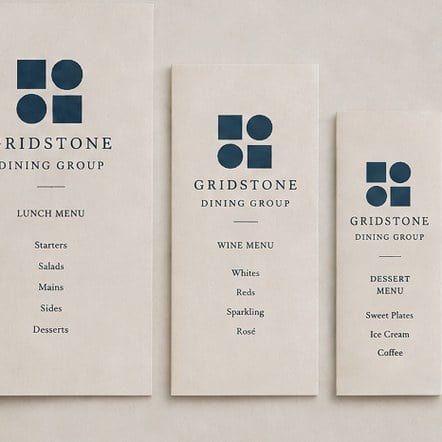
The right finish for every menu in the room.
Customized Restaurant Menus helps you pick a finish for each menu based on where it is read and how it is handled, then prints the whole set in one matching design. Tell the team about your lighting and service style, and a free mockup comes back within 24 hours.
- Matte, gloss, satin or soft-touch on one design
- Finish advice based on your lighting and service
- Unlimited free revisions before you approve
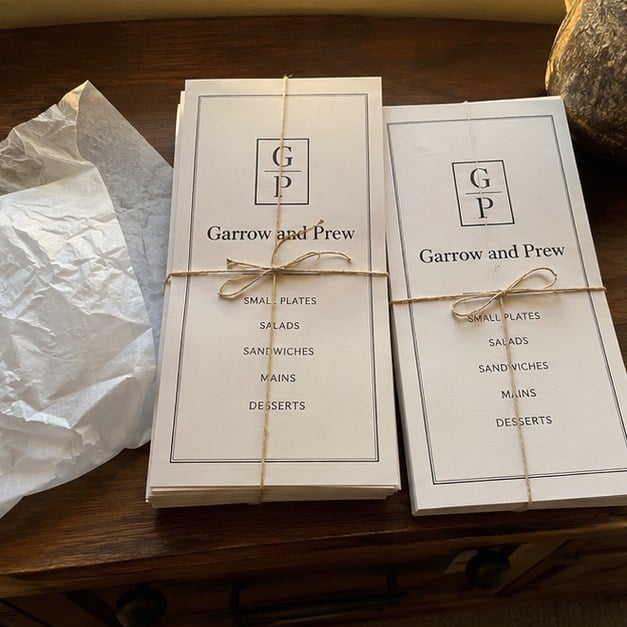
Matte and gloss restaurant menus, specified side by side.
Finishes
Choose matte, gloss, a satin middle ground or soft-touch, as a coating on paper or as a laminate. Spot gloss can highlight a logo on a matte menu.
Stocks
Both finishes work on paper, heavy card and synthetic stock, from single cards to folded menus and booklets for dine-in, bar and takeout use.
Branding
Your logo, colors and fonts print in full color on either finish, so every menu in the restaurant can share one look even when finishes differ.
Timing
A free mockup arrives within 24 hours and standard turnaround is about 2 weeks, with faster turnaround available through express shipping.
What is the difference between matte and gloss restaurant menus?
Matte restaurant menus have a flat, non-reflective surface that scatters light, while gloss restaurant menus have a smooth, shiny surface that reflects light and makes printed colors look deeper. The finish is applied as a coating on the printed sheet or as a laminate over it, and it changes how the menu reads, feels and wears more than most first-time buyers expect.
The choice is not about quality. Both finishes look professional when printed well, and both can be made wipeable. The real question is where the menu is read: under a warm pendant light, on a sunny patio, at a dark bar or on a bright takeout counter. Customized Restaurant Menus prints matte, gloss and in-between finishes, so you can pick per menu rather than committing the whole restaurant to one look.
There are also finishes between the two. Satin, sometimes called silk, has a soft sheen that lifts photos without the mirror effect of full gloss. Soft-touch is a velvety matte coating that feels premium in the hand and suits short, carefully designed menus.
Which finish is easier to read in a dimly lit dining room?
Matte is easier to read in a dimly lit dining room. A gloss surface reflects any single bright source, such as a pendant lamp, a candle or a wall sconce, straight back at the guest as a hot spot. When that reflection lands on the dish names or prices, the guest tilts the menu to find an angle, which is the opposite of an easy read.
A matte finish spreads that light evenly across the page, so type keeps its contrast from almost any angle. That matters most for long menus with smaller type, wine lists, and any room where the lighting is deliberately low. If your menu typography is already designed for dim service, a matte finish protects that work instead of undoing it with glare.
Gloss can still work in an evenly lit room with soft, diffuse overhead light, such as many quick-service and casual dining spaces. The darker and more directional the lighting, the stronger the case for matte.
Which finish makes menu photos and brand colors stand out?
Gloss makes menu photos and saturated brand colors stand out most. The smooth, shiny surface deepens blacks and makes reds, oranges and greens look richer, which is why photo-led menus for diners, burger bars, pizza places and family restaurants often use gloss. Food photography reads as sharper and more appetizing under a gloss coating.
Matte photos look softer and slightly more muted, which suits restaurants that sell with words and illustration rather than pictures. If you want a gloss look without the glare, satin is a practical compromise, and spot gloss lets you add shine only to a logo or a hero image on an otherwise matte menu.
Dark backgrounds deserve a note. A black or deep navy menu can look rich in gloss, but every fingerprint shows. On a matte or soft-touch finish the same dark design looks calmer, though heavy handling can leave faint marks there too, so ask for advice on dark designs that see constant use.
How do matte and gloss restaurant menus compare side by side?
Matte wins on readability and handling marks, while gloss wins on photo impact. The table below sets out how the two finishes behave in a working restaurant.
| Factor | Matte menus | Gloss menus |
|---|---|---|
| Glare under lamps and daylight | Low, reads from most angles | Higher, can create hot spots |
| Food photos and bold color | Softer, more muted | Richer, sharper, more vivid |
| Fingerprints and smudges | Less visible | More visible, especially on dark designs |
| Wiping between guests | Fine when laminated or coated | Fine when laminated or coated |
| Writing with pen or crayon | Takes pen and crayon well on paper | Pens and crayons tend to smear |
| Feel in the hand | Calm, understated, upscale | Bright, energetic, casual |
| Best fit | Fine dining, bars, patios, long menus | Photo menus, takeout, casual dining |
Neither finish is more durable by default. Durability comes from the stock and whether the menu is laminated, which is covered on the laminated vs. synthetic page. The finish decides how the menu looks and reads.
Which finish should each menu in a restaurant use?
Most restaurants do best with matte table menus and gloss where photos sell. One finish rarely suits every menu, and Customized Restaurant Menus can print the same design in different finishes for different jobs.
- Dine-in table menus: matte or satin for most rooms, gloss only for bright, photo-led casual dining.
- Bar and drinks menus: matte, because back-bar lights and low lamps create strong reflections.
- Dessert cards: gloss or spot gloss when the card sells with photos, matte when it is text-led.
- Daily specials: matte paper, which reads well and is easy to reprint as dishes change.
- Takeout and folded menus: gloss for a bold counter or doorstep presence.
- Kids’ menus and placemats: matte paper so crayons and pencils actually work.
Patio menus lean matte as well, since direct daylight bounces off gloss and washes out small type. If your patio and dining room share one menu, matte is usually the better compromise.
So which finish should you order for your restaurant menus?
Order matte if guests read your menu under low, warm or directional light, and order gloss if your menu sells with photos in a bright room. When you are torn, satin gives most of the photo lift with far less glare, and a spot gloss logo adds a premium touch to a matte menu.
A quick test helps: take your current menu to the table that gets the most direct light, at the time of your busiest service, and read it from a seated position. If you catch yourself tilting it to dodge reflections, your next order should be matte. If the photos look flat and the room is evenly lit, gloss will earn its place.
How do you order matte or gloss menus from Customized Restaurant Menus?
Ordering either finish follows the same simple process. You do not need to know the technical names for coatings; describe the room and the team will recommend a finish.
- Request a quote and list each menu you need, with the finish you prefer or a note that you want a recommendation.
- Describe your lighting, whether menus are wiped between guests, and whether guests write on any of them.
- Review your free mockup within 24 hours and request unlimited free revisions.
- Approve the design, pay only then, and receive your menus in about 2 weeks.
If you are unsure about stock as well as finish, the menu paper guide and the laminated vs. synthetic comparison cover the material side of the decision.
From your logo to delivered restaurant menus in four steps.
Send your artwork
Upload your logo or describe the idea and tell us the quantity you have in mind.
Get a free mockup
A designer returns a mockup of your restaurant menus with the artwork in place. Unlimited free revisions.
Approve the design
Nothing is produced until you approve the mockup, and you pay nothing before that.
Receive your order
Standard production is about two weeks after approval; faster turnaround is available with express shipping.
Custom restaurant menus for matte and gloss menus, answered.
Is a matte or gloss finish easier to read on restaurant menus in dim lighting?
Matte restaurant menus are easier to read in dim lighting because the flat surface spreads light evenly instead of reflecting a lamp or candle back at the guest. Gloss can create bright hot spots over dish names when the light comes from one direction. For dark dining rooms, wine bars and long menus with smaller type, Customized Restaurant Menus usually recommends matte or satin.
Do gloss restaurant menus show fingerprints more than matte menus?
Gloss restaurant menus show fingerprints and smudges more clearly than matte menus, especially on black, navy or other dark backgrounds where every mark catches the light. Matte surfaces hide light handling marks better. Both finishes can be laminated or coated so staff can wipe away prints between guests, but a matte dark design simply looks cleaner for longer during a busy service.
Can matte restaurant menus be wiped clean between guests?
Matte restaurant menus can be wiped clean between guests when they are laminated or given a protective coating. A matte laminate keeps the glare-free look while sealing the print against spills and cleaning. Uncoated matte paper, by contrast, absorbs liquid and should be treated as a short-run or disposable menu. Customized Restaurant Menus can advise which matte option suits your cleaning routine.
Which finish makes food photos look better on restaurant menus?
Gloss restaurant menus make food photos look most vivid, because the shiny surface deepens color and sharpens detail in dishes like burgers, pizza and desserts. Satin gives a softer version of that lift with less glare. Matte photos look gentler and more muted, which suits menus that rely on words or illustration. Your free mockup from Customized Restaurant Menus shows how your photos sit.
Can a restaurant menu have a matte finish on one side and gloss on the other?
A restaurant menu can be specified with different treatment on each side in some formats, for example a gloss photo panel on the cover and a matte reading side inside. Whether that suits your menu depends on the stock and format you choose. Mention the idea on your quote request and Customized Restaurant Menus will confirm the options for your design before you approve.
Does a soft-touch finish suit fine dining menus?
Soft-touch finishes suit fine dining menus well, because the velvety matte surface feels premium in the hand and keeps glare low under candlelight. Soft-touch works best on short, carefully designed menus, tasting menus and wine covers that are handled gently. Very heavy daily handling can leave faint marks, so a busy brasserie may prefer a standard matte laminate instead.
Which finish reduces glare on menus read outdoors in daylight?
Matte menus reduce glare outdoors, because direct sunlight and bright sky bounce off a gloss surface and wash out small type. On patios, terraces and sidewalk tables, a matte laminate or matte synthetic menu stays readable from a seated position. Customized Restaurant Menus usually suggests matte for any menu that shares duty between the dining room and an outdoor area.
Can servers write on matte restaurant menus with a pen or marker?
Servers and guests can write on matte paper restaurant menus with an ordinary pen or pencil, which makes matte the usual choice for order sheets, sushi checklists and tasting cards that get marked up. Gloss and most laminated surfaces cause ink to smear or bead. If you need a wipeable menu that accepts writing, ask Customized Restaurant Menus about suitable markers and finishes.
Should a bar drinks menu be matte or gloss?
A bar drinks menu is usually better in matte, because back-bar lighting, low lamps and candles create strong reflections on a gloss surface. Matte keeps cocktail names and descriptions legible in the dark. If the drinks menu sells with photos of signature cocktails, satin or spot gloss on the images adds impact while Customized Restaurant Menus keeps the reading areas matte.
Can a spot gloss highlight the logo on a matte restaurant menu?
Spot gloss can highlight a logo, a dish photo or a headline on a matte restaurant menu, so only those areas shine while the rest of the page stays glare-free. The effect gives a premium contrast that guests notice when they pick the menu up. Availability depends on the stock and format, so Customized Restaurant Menus confirms it with your quote and mockup.
Which finish works best for kids' menus that come with crayons?
Kids' menus that come with crayons work best on matte, uncoated paper, because crayon wax and pencil grip the fibers and color in properly. On gloss or laminated surfaces crayons slide around and leave a waxy smear. Activity menus and placemats are normally treated as disposable, so the matte paper version is also easy to reprint when the design changes.
Is a gloss finish worth it on takeout menus handed out at the counter?
A gloss finish is often worth it on takeout menus, because the menu works like an advert on a counter stack, a fridge door or a delivery bag, and gloss makes photos and offers look bolder. Takeout menus are read at home under ordinary light, so glare is rarely a problem. Customized Restaurant Menus can print takeout menus in gloss and table menus in matte.
Do dark menu backgrounds look better in matte or gloss?
Dark menu backgrounds look rich in gloss but show every fingerprint and reflection, while matte or soft-touch makes the same black or navy design look calm and upscale. For a dark menu handled every service, a matte laminate is the practical choice. Your free mockup within 24 hours from Customized Restaurant Menus lets you judge the design before choosing.
Does a gloss finish scuff more easily than matte on restaurant menus?
Gloss restaurant menus show surface scuffs and fine scratches more readily, because marks break up the even shine and catch the light. Matte finishes hide light wear better, though deep scratches show on either. How long a menu lasts depends mostly on the stock and lamination rather than the finish, so choose the material first and the finish second.
Can matte restaurant menus match a glossy brand style used on our website and packaging?
Matte restaurant menus can match a glossy brand style, because the logo, colors and fonts stay the same whatever the finish. Colors look slightly softer on matte, so a satin finish or spot gloss on the logo can bring the menu closer to shiny packaging. Customized Restaurant Menus checks your brand colors on the mockup before anything prints.
Is there a finish between matte and gloss for restaurant menus?
Satin, sometimes called silk, sits between matte and gloss for restaurant menus. Satin has a soft sheen that lifts photos and colors without the mirror-like reflections of full gloss, which makes it a sensible compromise for casual dining rooms with mixed lighting. Satin is a good default when one menu has to work at the bar, the dining room and the patio.
How do I tell Customized Restaurant Menus which finish I want on a quote request?
Restaurant menus are easy to specify by finish on the quote form: name each menu and add matte, gloss, satin or soft-touch next to it. If you are unsure, describe the lighting, whether menus are wiped, and whether guests write on them, and Customized Restaurant Menus will recommend a finish and show it on your free mockup.
Ready to see your restaurant menus with your logo?
Free mockup within 24 hours. Minimum order 12. Standard turnaround about 2 weeks, faster available. You pay nothing until you approve the design.
Related pages
- Get a custom quote for restaurant menus
- How it works
- Laminated vs. synthetic restaurant menus
- Full-color printed restaurant menus
- Dine-in restaurant menus
- Bar, drinks and dessert menus
- Takeout and folded menus
- Restaurant menu care: how to clean, store and rotate your menus
- Winter Menu Printing Guide: January Resets, Restaurant Week, Valentine's Day and Spring Menus
- Custom Restaurant Menus for Breweries and Taprooms
Win Free Stuff
Enter below for a chance to win plus receive 10% off your first order.
🎉 You are in!
We will text you your 10% off code. Good luck!