The biggest restaurant menu mistakes on a first order are unfinished dish lists, the wrong stock for how menus are handled, type that is hard to read in the dining room, forgotten drinks and kids' menus, and proofs approved by one person. Customized Restaurant Menus catches most of these at the free mockup stage, before anything is printed or paid for.
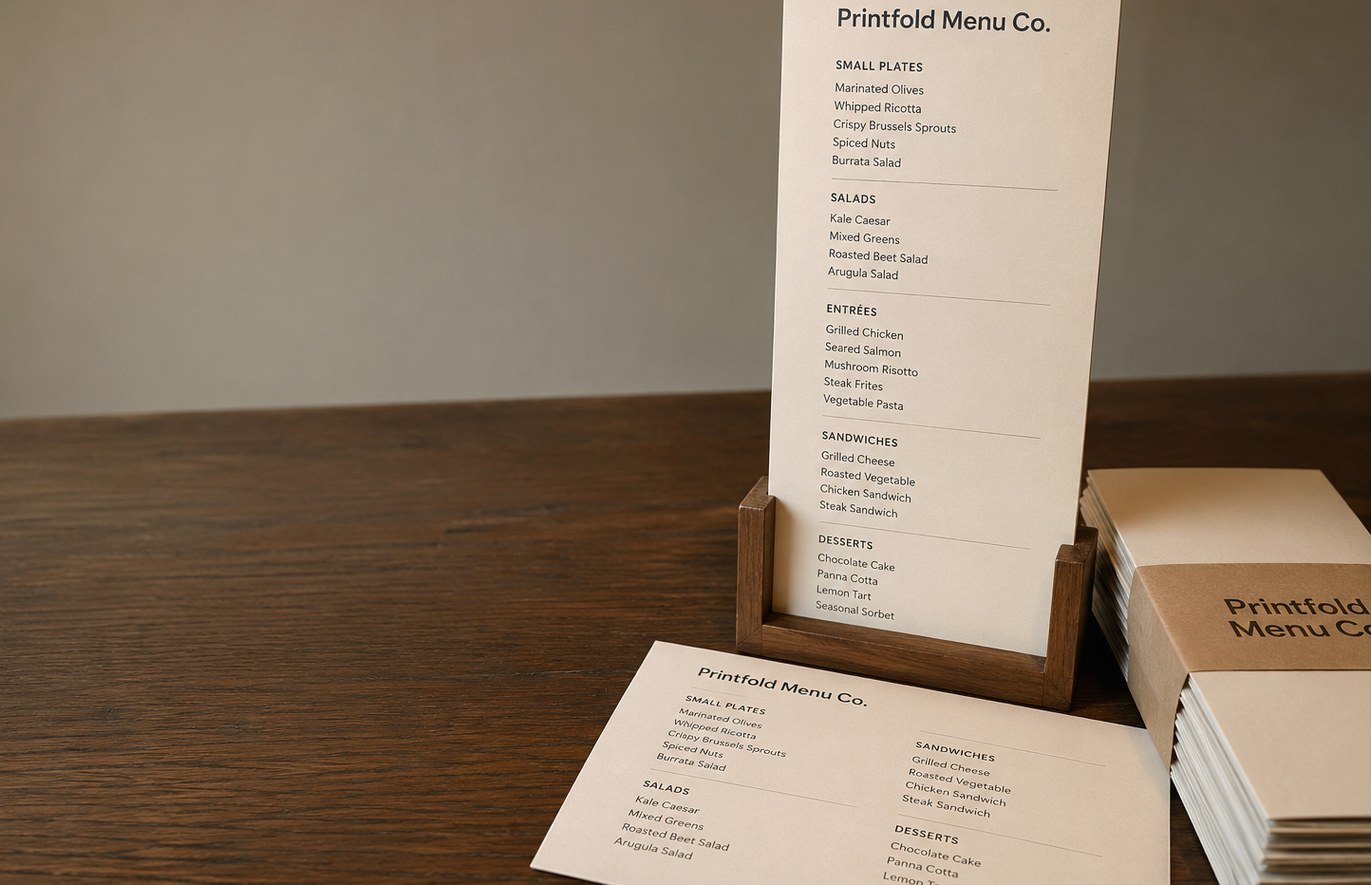
- Free mockup within 24 hours
- Unlimited free revisions before approval
- Pay nothing until you approve the design
- Standard turnaround about 2 weeks after approval
What are the most common mistakes on a first restaurant menu order?
The most common mistakes on a first restaurant menu order are sending unfinished dish lists, choosing a stock before thinking about how the menu is handled, printing type that is too small for the dining room lighting, forgetting the menus that sit beside the main one, and approving a proof that only one person read. Each of these is cheap to fix before approval and expensive to fix after the restaurant menus are printed.
None of these mistakes come from carelessness. They happen because a menu order lands in the busiest weeks of a restaurant’s life: an opening, a seasonal change, a new chef or a remodel. The kitchen is still testing dishes while the front of house is asking for something to hand to guests.
Customized Restaurant Menus builds the order around catching these problems early. You get a free mockup within 24 hours, unlimited free revisions and you pay nothing until you approve the design. The sections below walk through each mistake, what it looks like on the floor and the simple check that prevents it.
Why does sending an unfinished dish list cause problems?
An unfinished dish list causes problems because every late change ripples through the whole layout of restaurant menus. Moving one entree can push a section onto a new column, break the alignment of prices and leave an awkward gap where a dish used to be. Small edits rarely stay small once the menu is designed.
The fix is not to wait until every dish is perfect. Send the structure early: section names, the dishes you are confident about and clear placeholders for anything still in testing. Mark placeholders in capitals so nobody mistakes them for final copy. That lets the designer build a layout with room for the dishes that are still moving.
- Lock section order before you lock dish names.
- Flag any dish that might be cut, so the layout can absorb its removal.
- Keep one master document for menu text instead of edits scattered across texts and emails.
When the kitchen signs off on the final list, swapping placeholders for real copy is a quick revision instead of a redesign. Customized Restaurant Menus offers unlimited free revisions, but a stable structure means each round gets you closer to approval rather than starting over.
Which menu stock mistakes show up after the first week of service?
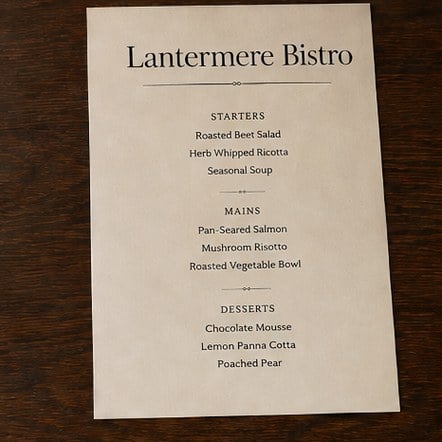
Stock mistakes show up when restaurant menus are chosen for how they look in a sample and not for how they are handled during service. A soft uncoated card can feel beautiful at the pass and look tired after a busy weekend of sticky hands, spilled drinks and wiping. A heavy laminated menu can feel out of place at a bistro that changes its specials daily.
Match the stock to the job each menu does, not to a single house choice for everything.
| Menu | Common mistake | Better choice |
|---|---|---|
| Dine-in food menu | Thin paper that creases in the first week | Laminated or synthetic stock if it is wiped between tables |
| Daily specials card | Laminating a card that changes often | Uncoated card printed in short runs |
| Takeout menu | Heavy card that will not fold into a bag | Folded paper sized for the bag or the door |
| Patio menu | Paper that curls in damp air | Synthetic or laminated stock |
If you are unsure, the laminated vs. synthetic comparison covers the wipe-down decision in detail. Customized Restaurant Menus can show the same design on more than one stock in the mockup, so you can choose with your service style in mind.
How do readability mistakes hurt a restaurant menu?
Readability mistakes hurt restaurant menus because a guest who cannot read the menu orders the safest dish or asks the server to read it aloud, which slows every table. The usual culprits are type that looks fine on a bright laptop screen, thin script fonts for dish names, low-contrast color on dark backgrounds and descriptions crammed edge to edge.
Read every proof in the real room. Print the mockup or hold a phone at arm’s length at a corner table during evening service, then ask a guest-aged colleague, not the designer, to read the dish names and prices aloud.
- Use script or decorative fonts only for headings, never for descriptions.
- Keep strong contrast between text and background, especially on dark or textured designs.
- Leave white space between sections so guests can scan rather than read every line.
- Offer a large-print version where your guests need one, as many senior living dining rooms do.
Customized Restaurant Menus will flag type that looks too small or too light on the mockup, and unlimited free revisions mean there is no reason to approve a menu you squint at.
What happens when a restaurant forgets the menus around the main menu?
Forgetting the supporting menus means the dining room ends up with a polished main menu next to a photocopied drinks list, a handwritten dessert card and takeout menus in an older design. Guests notice the mismatch, and the restaurant pays twice when those pieces are redesigned separately a few weeks later.
Before you approve anything, walk the guest journey from the door to the bill and list every piece of printed menu a guest touches.
- Host stand and window menus.
- The main dine-in menu.
- Bar, drinks and dessert menus.
- Daily and specials cards.
- Placemat and kids’ menus.
- Takeout and folded menus for the bag and the counter.
You do not have to print all of them at once. The point is to design them as one family so the fonts, colors and logo placement match. Customized Restaurant Menus can quote the whole set together and produce only the pieces you need now, keeping the rest ready for a later run.
Why is a single-person proof approval risky?
A single-person proof approval is risky because the person who wrote the menu text is the worst person to proofread it. Their eyes fill in missing words, and they do not know the allergen detail the chef changed yesterday or the dish the bar manager renamed. Once restaurant menus print, a typo in a dish name sits in front of every guest until the next run.
Give the proof to three readers, each with one job:
- The chef or kitchen lead checks dish names, ingredients and allergen or dietary marks against what the kitchen actually cooks.
- The front-of-house manager checks order, section names and anything servers will be asked about.
- The owner or general manager checks prices, the logo, contact details and any QR code.
Read the proof slowly, out loud, from the bottom up, so your brain stops predicting the next word. Scan any QR code with two different phones. Customized Restaurant Menus only moves to production once you approve the design, and you pay nothing until that approval, so take the extra day if a reader needs it.
How can timing and quantity mistakes be avoided on restaurant menus?
Timing and quantity mistakes happen when restaurant menus are ordered for the opening date with no margin, or ordered for the number of seats with no spares. The result is a launch night with old menus on the tables, or a dining room that runs short after a few weeks of spills and wear.
Work backward from the service date, not the print date. Allow for the 24-hour mockup, your team’s review time, the standard turnaround of about 2 weeks after approval and a few days to check the delivery. If the date is tight, ask about faster turnaround with express shipping before you lock the date.
For quantity, count every place a menu lives: tables, the bar, the host stand, the patio, server copies and a reserve shelf for replacements. Our blog covers quantity planning and menu timelines in more depth.
Avoid one more quiet mistake: never let old and new menus mix after a reprint. Recycle or box the previous run on the day the new restaurant menus go into service, so a guest never reads last season’s prices.
What should a restaurant check before approving its first menu order?
Before approving a first restaurant menu order, check the text, the stock, the readability, the full set of menus and the dates in one pass. This short checklist pulls the mistakes above into a single review that takes less time than a reprint.
- Every dish name, description and allergen mark matches what the kitchen serves today.
- The stock suits how each menu is handled, wiped or carried.
- Dish names and prices are readable at a corner table in evening light.
- Drinks, dessert, specials, kids’ and takeout menus match the main design or are planned for it.
- Three readers have signed off, each on their own area.
- The quantity covers every location in the room plus spares.
- The delivery date leaves margin before the service date.
When the checklist is clean, approval is the easy part. Customized Restaurant Menus will turn a custom quote request into a free mockup within 24 hours, and how it works explains each step from first message to delivery.
Frequently asked questions
Can I fix a mistake on restaurant menus after they have been printed?
Restaurant menus cannot be edited after printing, so a printed error usually means a reprint of the affected menu. Customized Restaurant Menus makes reprints straightforward because your approved design is kept on file, but the cheaper path is catching the error on the proof. Have three people read the mockup before you approve, and the reprint becomes something you plan, not something you need.
What is the most expensive mistake on a first restaurant menu order?
The most expensive mistake on a first restaurant menu order is usually approving a proof with an error in prices or dish names, because the whole run then needs replacing. Layout and stock issues are annoying, but wrong prices affect every guest and every bill. A careful three-reader proof check and a final read in the actual dining room prevent most costly reprints.
Should a new restaurant print menus before the soft opening ends?
Restaurant menus for a brand-new restaurant are often best printed in a smaller first run that covers the soft opening, followed by a full order once the kitchen settles the dishes. Customized Restaurant Menus keeps the approved design on file, so adjusting dish names and reprinting after feedback is a simple revision rather than a new design project.
How do I stop servers from handing out outdated restaurant menus?
Outdated restaurant menus stay in circulation when old stock is left at the host stand, the bar or a back shelf. On the day new menus arrive, collect every old copy, count them and recycle them. Customized Restaurant Menus can add a small version code or season name in the footer so managers can spot an old menu at a glance.
Is it a mistake to use one menu design for lunch and dinner?
A single design for lunch and dinner restaurant menus is fine when the dishes barely change, but it becomes a mistake when guests have to hunt for which items are available. If the lunch list is shorter or priced differently, a separate lunch card in the same style is clearer. Customized Restaurant Menus can design both as one matching family in a single order.
Can too many dish photos make a restaurant menu worse?
Restaurant menus with a photo beside every dish can feel crowded and make the dining room look less considered, especially on smaller formats. A few strong photos of signature dishes usually guide orders better than many small ones. Customized Restaurant Menus can show photo-heavy and photo-light layouts side by side in the mockup so you can compare them before you commit.
What menu text mistakes do restaurants make most often?
The most frequent text mistakes on restaurant menus are inconsistent dish naming, long descriptions that list every ingredient, missing allergen marks and prices formatted differently across sections. Pick one style for capitals, one way to write prices and a short limit on description length. Customized Restaurant Menus applies that style consistently once you share it with your menu text.
Should I copy a competitor's restaurant menu layout?
Copying another restaurant's menu layout is a mistake because the structure that suits their dishes and dining room rarely suits yours. Your restaurant menus should follow your own best sellers, your section order and your service style. Customized Restaurant Menus starts from your dish list and logo, then builds a layout around what you want guests to notice first.
How do I know if my restaurant menu has too many items?
Restaurant menus with too many items slow guests down, push servers into long explanations and stretch the kitchen. Warning signs include dishes that rarely sell, sections that spill onto an extra page and guests asking for recommendations at most tables. Trim slow sellers before the next print run, and Customized Restaurant Menus can rebalance the layout around the shorter list.
Can a restaurant change paper stock on its second order if the first was wrong?
Restaurant menus can move to a different stock on the next order without starting the design from scratch. Customized Restaurant Menus keeps your approved artwork, then adjusts it for the new stock, such as switching from uncoated card to laminated or synthetic menus that survive wiping. A fresh mockup confirms how the design looks on the new material before production begins.
Who should be responsible for the restaurant menu order in a small team?
Restaurant menus in a small team work best with one named owner who collects text, gathers proof sign-offs and confirms the delivery date. Without that owner, edits arrive from several people and nobody is sure which version was approved. Customized Restaurant Menus sends every mockup and revision to the contact you name, which keeps one clear thread for the whole order.
Is it a mistake to leave QR codes off printed restaurant menus?
Leaving a QR code off restaurant menus is not a mistake in itself, but it is a missed chance when you want guests to find online ordering, reviews or a full wine list. If you add one, place it where it will not be covered by a hand or a glass and test it with two phones. Customized Restaurant Menus can position it on the proof.
Get a free mockup for your restaurant menus
Send your logo or idea and the quantity you have in mind. Customized Restaurant Menus returns a free mockup within 24 hours, you approve the design before anything is produced, and standard turnaround is about two weeks with faster options available. Get a custom quote.